
By Milijana Smiljanic.
Stop Building Products
Only for Power Users
The Case for User Research

When building products, it’s easy to fall into a trap: listening only to the loudest voices. For many B2B companies, that means product managers (PMs) speaking mostly with power users, the experts who know every button, who stretch the product to its limits, and who always have strong opinions.
The problem? If these voices are your only input, you end up shaping a product around a small fraction of your audience. It looks great for advanced users, but it feels complicated and overwhelming for everyone else.
I’ve seen this firsthand while working on BlueCat’s Edge product.
The Edge Problem
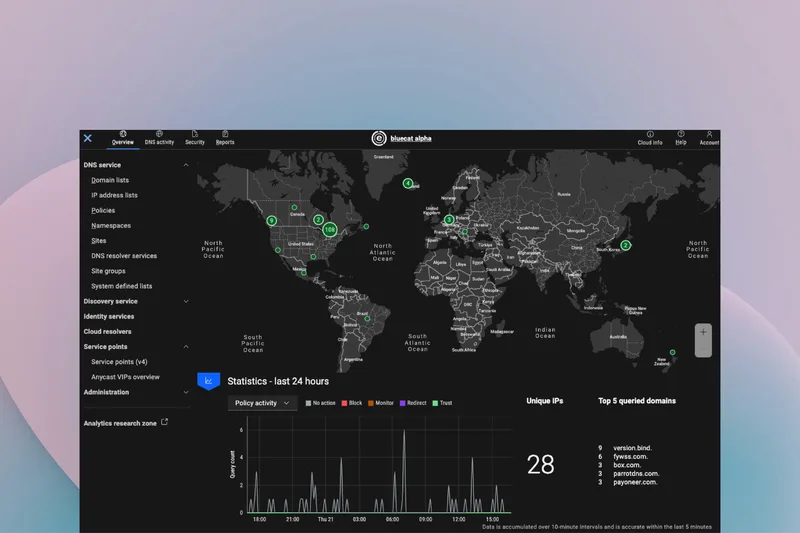
Edge is a powerful product that helps organizations manage DNS traffic securely at branch offices and remote sites. Naturally, its power users, network engineers with deep technical expertise, have a lot to say.
For a long time, PMs were the ones talking with these users directly, and their conversations were full of advanced feature requests.
On paper, these sounded like the right things to build. After all, if your most advanced customers are asking for it, shouldn’t you deliver?
But something didn’t add up. Adoption among less-advanced users lagged. New customers told us Edge felt “complicated” and “not intuitive.” They weren’t making it past the first layer of the product.
That’s when we brought user research into the picture.
What Research Revealed
By running interviews and usability tests with a broader range of users, not just the power users, we uncovered pain points that had been invisible before:
- Navigation was confusing. New users struggled to find the most basic settings, while power users had long since memorized the paths.
- The overview page wasn’t helpful. Instead of providing a clear “at-a-glance” view, it was overloaded with details only advanced users cared about.
- Documentation wasn’t enough. Less-experienced users relied heavily on documentation to get started, but the docs couldn’t compensate for poor UX.
In other words, we weren’t failing because the product lacked advanced features.
We were failing because
the basics weren’t working for the majority of users.
The Shift
Power users shine a spotlight on the edges of a product. But they can’t show you the full picture. Only user research can do that, by capturing a spectrum of voices, validating assumptions, and showing how real people interact with your design.
For Edge, this shift meant turning a product that felt complicated into one that welcomed more users without sacrificing depth. For any team, the lesson is the same:
- Talk to power users.
- But also run structured unbiased research.
- And always balance the two.
That’s how you build products that grow.
Final Thoughts
The biggest takeaway from our Edge experience is simple: when we only talk to power users, we forget about everyone else.
Power users are invaluable. They stretch the product to its limits, they uncover edge cases, and they often predict where the product could go next. But they also represent just a sliver of the audience, people who already understand the complexity, who know the workarounds, and who rarely struggle with onboarding because they’ve long since passed that stage.
When product conversations are limited to this group, the voices of new and less-advanced users get lost. Their struggles with navigation, their frustration when documentation doesn’t help, their hesitation at an interface that feels intimidating, all of that remains invisible. And in the end, it’s these very users who decide whether the product grows. If they can’t get started, they churn. If they feel overwhelmed, adoption slows. If they don’t see value quickly, they never become power users in the first place.
What we learned through research on Edge is that it’s not an either/or. It’s not power users versus new users—it’s both. The job of PMs and product teams is to hold that balance: build depth for the experts, but also create clarity, simplicity, and confidence for the beginners.
User research was the key to rediscovering that balance. By deliberately seeking out perspectives beyond the power-user bubble, I uncovered critical gaps that shaped our roadmap and improved the experience for everyone.
That’s the real lesson from Edge, and it’s one every product team can apply.
More stories & insights
 Read the full story →
Case study
Edge UX Optimization Research
Edge felt complicated. I listened, and shared recommendations to simplify their journey.
 Read the full story →
Case study
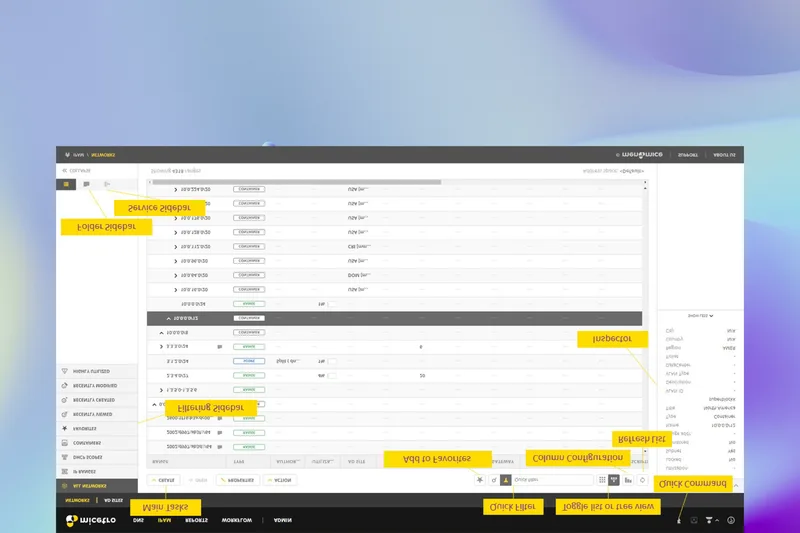
Micetro - Understanding Console Strengths
Turning console superpowers into Micetro Web decisions, so users can switch without compromise.
 Read the full story →
Article
My Practical Playbook for Making Research Stick
How I created the end-to-end system I process to turn insights into shipped improvements.