
By Milijana Smiljanic.
My Practical Playbook for Making Research Stick
Research doesn’t ship, your process that turns insights into tickets, owners, and release dates does.
Most teams don’t suffer from a lack of research. They suffer from research that never translates into decisions, ownership, and delivery. After stepping in as the first UX researcher, I built a simple but rigorous process that closes the gap between “we learned something” and “we shipped something.”
Below is the playbook—lightweight where it should be, prescriptive where it must be.
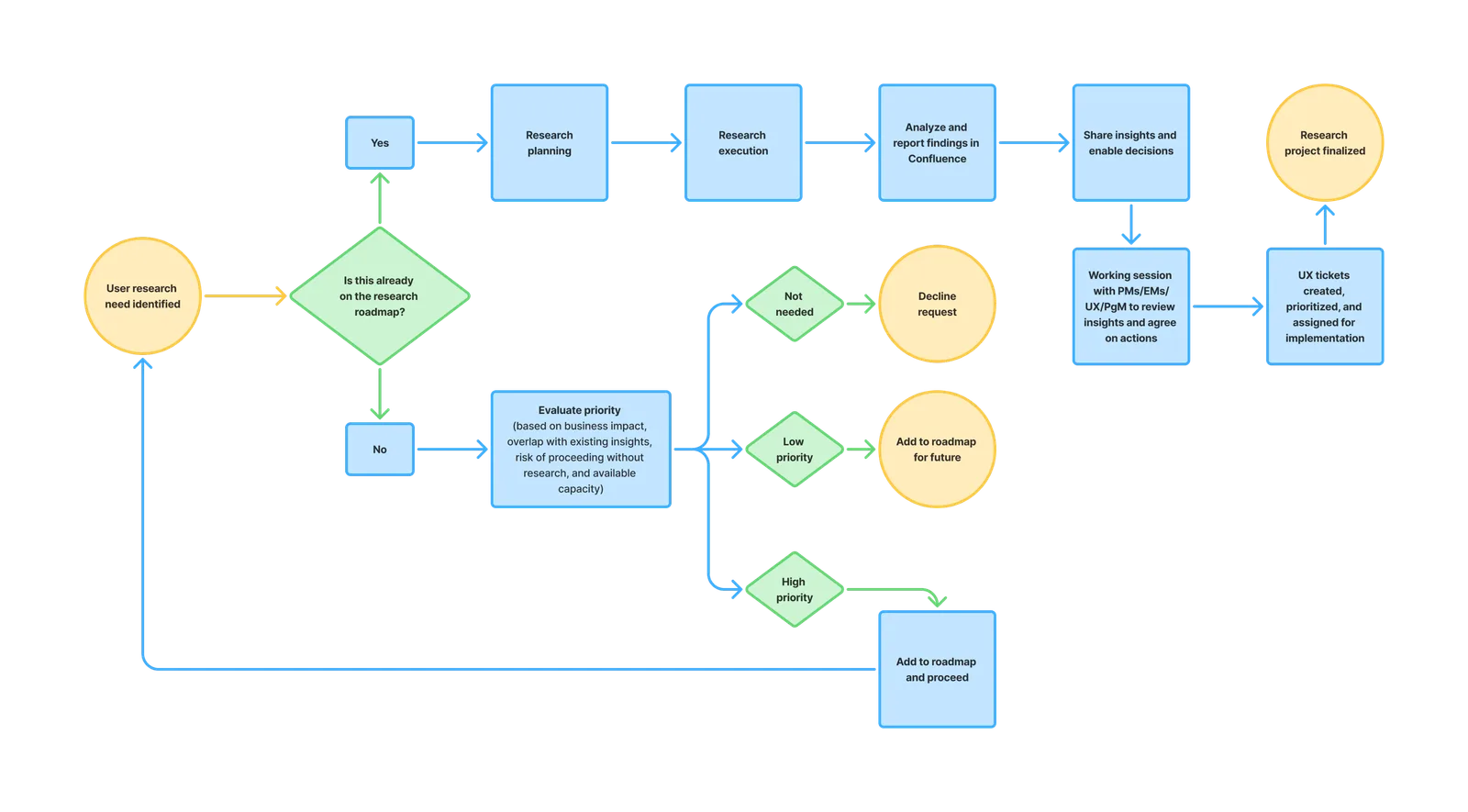
The process at a glance
- Research roadmap. A living roadmap, built with PM, Design, and Engineering that aligns studies to key initiatives, prioritizing by impact, feasibility, and timing. It’s updated as business needs evolve.
- Off-roadmap requests. Urgent asks are welcomed—if they come with a hypothesis, the key questions, and why it’s high-value now. We triage by business impact, overlap with existing insights, risks of proceeding without research, and available capacity. This transparency maximizes value.
- Kickoff & plan. We align scope and goals with PMs, designers, and engineers; I draft the plan (goals, methods, participants, deliverables, timelines) and circulate it for feasibility and alignment. Everyone knows what we’re investigating and why before any sessions begin.
- Execution. We use the right methods, match the target audience, collect data ethically, and store notes/recordings consistently so findings are reusable.
- Synthesis & reporting. Findings are distilled into crisp, decision-ready insights with recommendations. We present a readout for discussion and immediate clarification, then share a concise email summary for the wider group.
Up to here, nothing is unusual. The differentiator is what happens next.
A research report doesn’t change a product, your process does.
The “insights-to-action” engine
- STEP 1
Create a UX ticket per insight. After share out is finidhed, I create a UX ticket for each prioritized insight/recommendation so no decision lives only in slides or memory. These tickets become the single source of truth for scope, rationale, and acceptance criteria. Outcomes from the session directly guide which tickets exist and how they’re prioritized. - STEP 2
Working session with owners. After sharing the report, I schedule a working session with program managers, PMs, and other stakeholders to jointly review insights, discuss recommendations, and decide what we’ll implement—and when. This is the key moment where understanding becomes commitment tied to the delivery timeline. - STEP 3
Link to delivery (BPM/Jira) and assign owners. Program managers connect these UX tickets to the relevant BPM/Jira work items, sequence them by impact and feasibility, and assign clear owners for the current or next release depending on scope and capacity. - STEP 4
Track impact and close the loop. I track what shipped, measure outcomes (adoption, task success, support reduction) where possible, and capture lessons for both the product and the process. This is how research becomes cumulative advantage rather than a one-off activity. - STEP 5
Standardize and scale. Consistent formats, a searchable archive, and lightweight self-service testing patterns help the org reuse knowledge and move faster over time.
Why this works?
 Forces decisions
The working session turns “nice insights” into committed work.
Prevents drift
If it isn’t a ticket with an owner and date, it’s a wish.
 Scales knowledge
Consistent tickets and links make insights discoverable and reusable.
Proves value
Impact tracking shows what research changed, and what to refine next.
More stories & insights
 Read the full story →
Article
Conducting User Research With NO Budget
How I turned $0 budget, into a thriving user research practice by building allies inside my company.
 Read the full story →
Article
Stop Building Products Only for Power Users
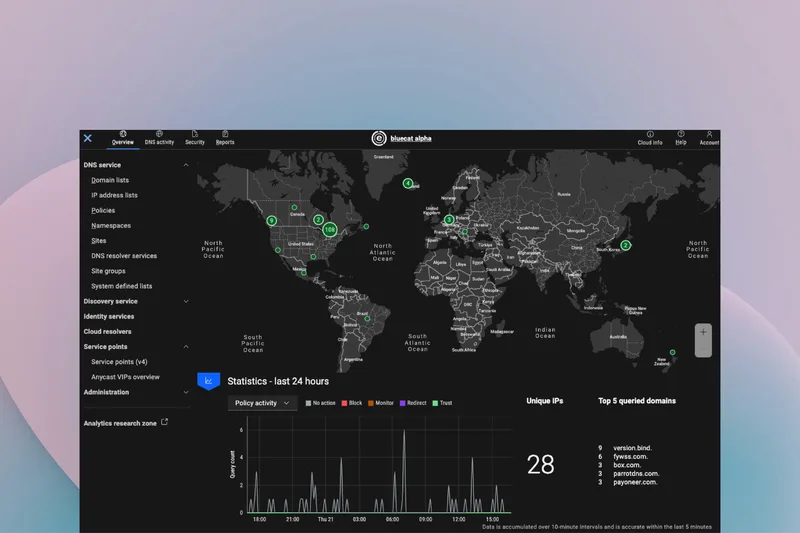
Why listening only to power users can hold your product back - BlueCat Networks Edge Example.
 Read the full story →
Case study
Edge UX Optimization Research
Edge felt complicated. I listened, and shared recommendations to simplify their journey.